My Favorite Tools for Cleaning and Prepping Items for Resale
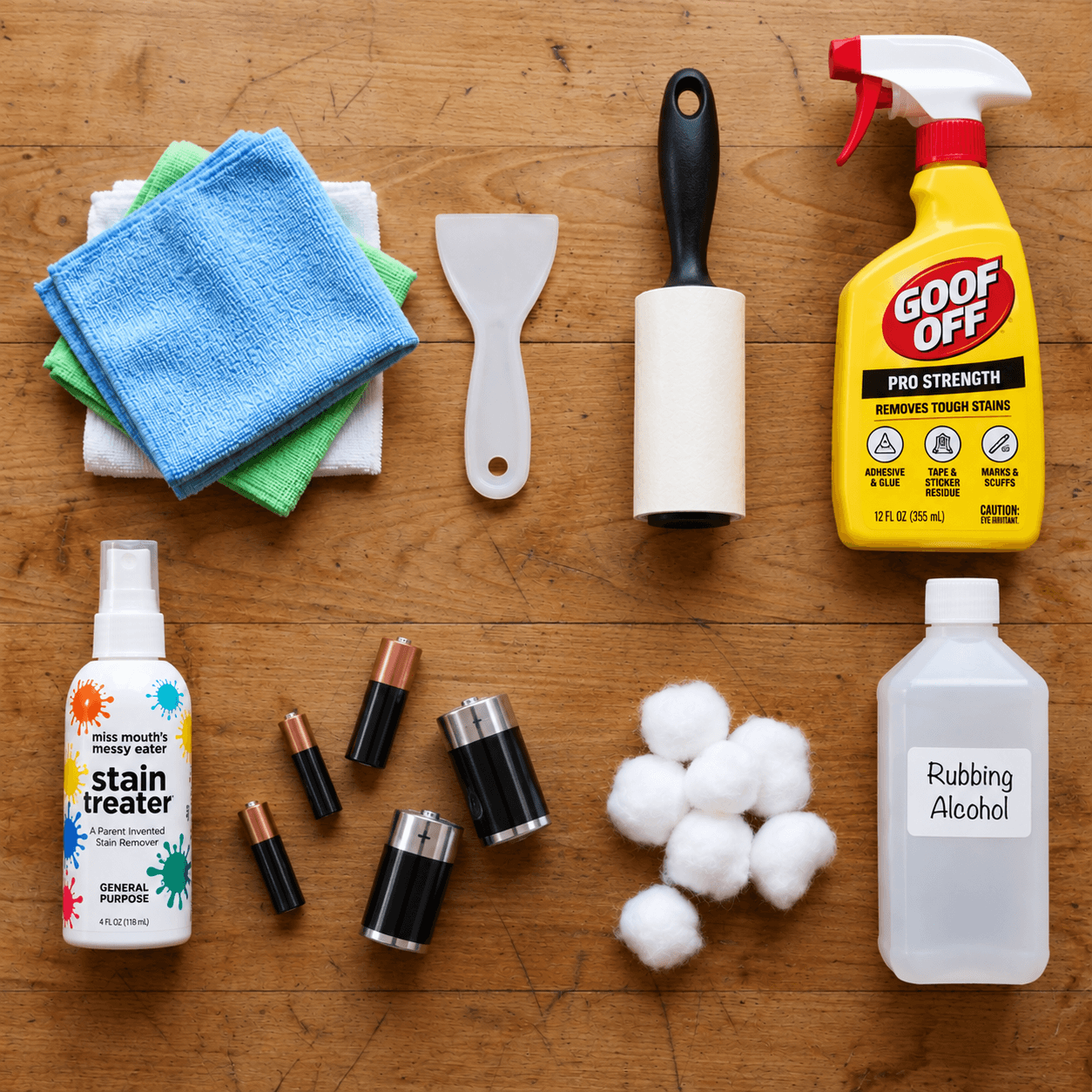
In the world of reselling, rarely will something come into your possession ready to photograph and list; there is almost always a bit of prep work involved. Clothing has to be ironed or perhaps have a button sewn on; shoes have to be cleaned or polished, and kitchenware has to be wiped down. At a minimum, price stickers have to be removed. And if you sell electronics, perhaps small repairs need to be made.
When I was starting out as a reseller, I never would have imagined all of the different ways in which I would be prepping items for listing. Some situations have truly stumped me (like opening up the battery chamber of an electronic toy to find a buildup of old, corroded battery acid). Because I sell a bit of everything, over time I have amassed a small toolkit of reselling tools that I use to clean, repair and prep items before I photograph and list them.
In this post I will share with you exactly what’s in my listing prep toolkit so that I am never caught unprepared. The good news is that most of these items were inexpensive, and some I already had. As you put together your own reselling prep toolkit you won’t need to go out and buy everything all at once. My hope is that this article will serve as a resource you can come back to when you encounter a problem along the way on your own reselling journey.
Disclosure: This post contains affiliate links. If you purchase something through one of these links, I may earn a small commission at no additional cost to you. I only recommend products I personally use.
Before You Buy Anything: Start With What You Have
There are plenty of items laying around your home that you can include in your reseller prep toolkit. Here are a few examples:
Scissors - for cutting tags
Cleaning rags - for dusting and removing smudges and scuffs
Cotton swabs - for cleaning anything with crevices (shoe treads, battery chambers, etc.)
Rubbing alcohol - for removing residue from price stickers
My general rule of advice is to see if you can get the job done with what you have before you go out and buy anything new. You don't need a specialized reselling toolkit to get started. Add tools as you encounter problems that the supplies you already own can't solve. (See also: How Much Does It Cost to Start Reselling? A Realistic Beginner Budget)
The Reselling Tools I Use to Prep Inventory
But of course there will be times when you just don’t have the thing you need. That’s where this list comes in handy.
A note: I am recommending my favorite items here. There are certainly lots of alternatives on the market, but these are all items that I personally use and attest to.
Removing Stickers, Labels and Sticky Residue
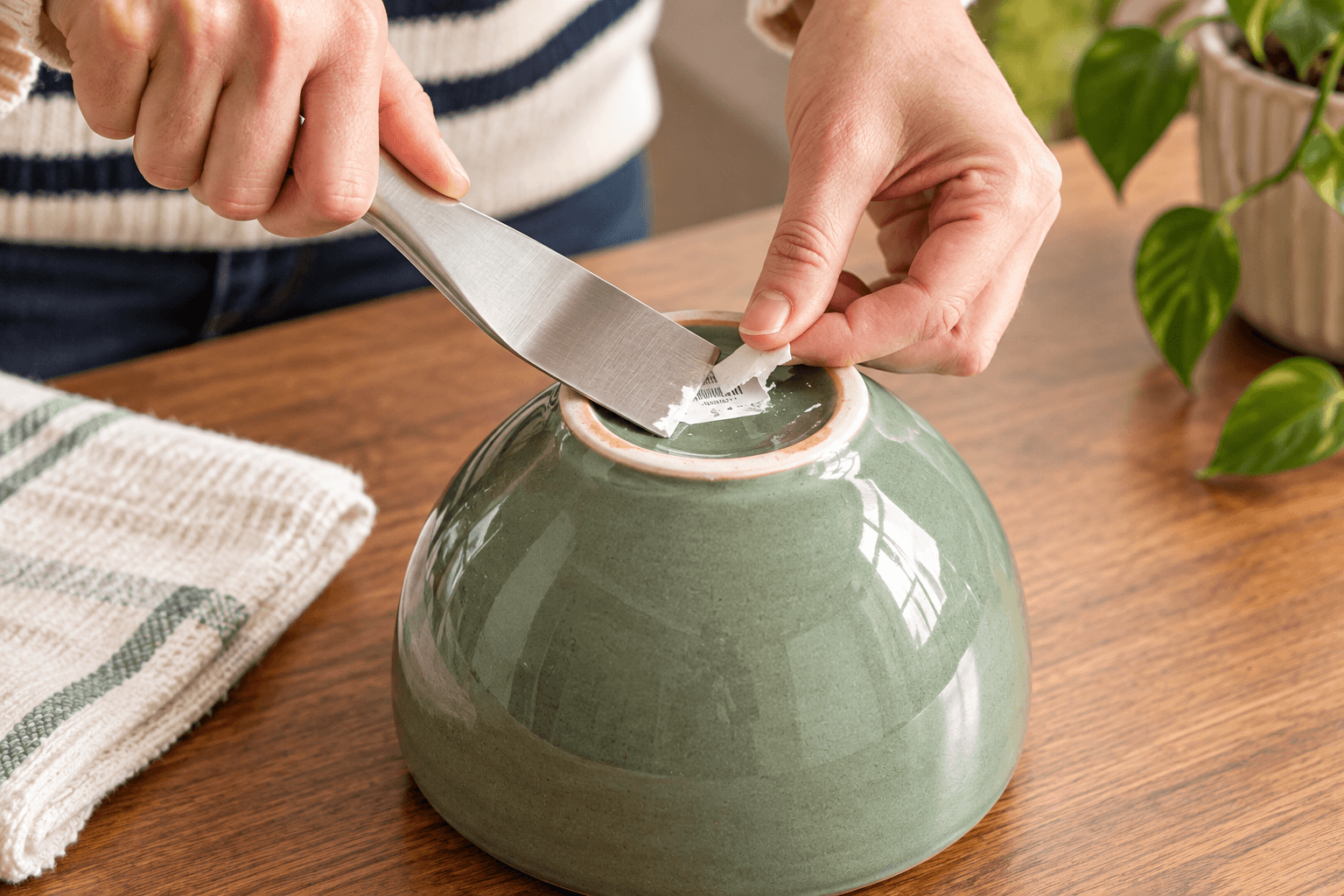
Scraper Knife
Use it for: Removing price tags and stickers from smooth, hard surfaces.
When it works best: When your thumb nail just won’t do the trick, a scraper knife works like a dream. But I use it only on surfaces that won't scratch or peel. If I'm unsure, I test an inconspicuous area first or use a gentler method.
What I use: A basic one like this.
Goo/Adhesive Remover
Use it for: Removing the sticky residue left by price tags and other stickers.
When it works best: To remove the sticky residue left behind after you’ve removed a price tag or other sticker with your scraper knife.
What I use: Rubbing alcohol can work well, but I use Goof Off.
Tools for Cleaning and Prepping Clothing and Shoes
Stain Remover
Use it for: This one’s obvious. I have sold plenty of clothing items that started out with stains on them. Sometimes a piece of clothing can appear stain-free in the store, but when you get it home and start taking photos, suddenly a stain will become visible. This tends to be especially true with children’s clothing (go figure).
When it works best: Removing stains from garments that are machine washable.
What I use: There are lots of stain removers out there but I use Miss Mouth’s Messy Eater Stain Treater because it is amazing.
Lint Roller
Use it for: Removing lint, carpet fibers and pet hair from fabric.
When it works best: When you have pets or are laying items on the floor to photograph them (especially anything dark in color).
What I use: Any lint roller will work, but I use ones that are strong enough for pets because they are supposedly a little bit stronger.
Fabric Shaver
Use it for: Removing minor pilling on garments.
When it works best: You have a sweater or a pair of wool pants that have a lot of life left, but has some pilling. Shaving the fabric can make a dramatic difference!
What I use: They make electronic ones, but I just use one of the simple ones that looks like a little comb.
Shoe Polish
Use it for: Sprucing up leather shoes, bags, or jackets that are in good condition but have visible scuffs or look a little tired.
When it works best: I keep a bottle of black shoe polish that I use to restore an even finish and make minor wear less noticeable. Of course you may find that you need other colors as well.
I first added shoe polish to my toolkit when I picked up a pair of black Madewell loafers from a “free box” in my neighborhood. They were in good shape, but the leather looked a bit dull. I knew they were good quality and had a lot of life left in them, but just needed a bit of sprucing up before they’d look good to a potential buyer. I also used it recently to refresh an old leather briefcase that I no longer used (it sold quickly).
What I use: I use Kiwi Instant Polish because it’s a one step product and easy to use. So far I’ve only needed it in black, but they also make it in neutral.
Prepping and Testing Small Electronics
I don’t sell a lot of electronics, but I have sold quite a few electronic educational toys. So I am not qualified to talk about cleaning and repair of electronics writ large; however, I have quite a bit of experience cleaning battery compartments.
First of all, if you are selling anything electronic, you should remember to test it to make sure it works, whether that means plugging it in or putting in fresh batteries. The worst is when you bring home something that looks great on the outside, but then open the battery chamber to find what look like 20 year old batteries inside.
Small Screwdriver Set
Use it for: Opening battery compartments and other small screwed-on covers on toys, clocks, remotes, small electronics, and other battery-operated items.
When it works best: Items with tiny Phillips or flat-head screws that are too small for a standard household screwdriver.
What I use: I bought this miniature screwdriver set on Amazon for $8 and have used it umpteen times (or as my Australian stepfather says, “umptydump times”). It has one base handle and a bunch of interchangeable heads that attach via magnet. I seriously love this set and make sure I never misplace it!
Rubbing alcohol and cotton swabs
Use it for: Cleaning residue from corroded batteries
When it works best: I sometimes use rubbing alcohol and cotton swabs to clean battery compartments. Battery leakage and corrosion can require different cleanup methods, though, depending on the type of battery and device. So you should check manufacturer instructions. However, I have had good results with this approach.
Batteries in Common Sizes
Use it for: Testing battery-operated electronics to make sure they work.
What I use: I keep AA, AAA, and C batteries on hand and in a convenient location (my desk drawer) so that I can test items before listing.
Why I Always Test Electronics Before Listing Them
I recently sold an electronic toy - a LeapFrog LeapTop - that I had forgotten to test. The buyer immediately notified me that the battery chamber contained old, corroded batteries, and the toy was inoperable. I had no choice but to give a full refund and allow the buyer to keep the toy. If I had remembered to test the toy, I would have found the problem and most likely could have cleaned it up and gotten it working. With these simple tools onhand, you can avoid that type of situation.
Stephanie's Advice
If you're sourcing a battery-operated item, open the battery compartment before you buy it whenever you can. I've learned that what looks perfectly fine from the outside can be a very different story once you open the battery cover.
Tools for Cleaning Scuffs and Marks From Hard Goods
Goo/Adhesive Remover
Use it for: Marks or stubborn residue on certain plastic/hard items.
When it works best: Anytime I need to remove a scuff mark, stain, or sticky stuff from a hard surface. I use it to remove residue left by price tags, marker and pen ink, run-of-the-mill smudges and scuffs, and also to clean the bottoms of shoes.
What I use: Goof Off is my go-to scuff remover because it’s so versatile.
A warning: Because Goof Off is so effective at removing stains, I would not recommend using it on anything that has been dyed or is not colorfast, such as anything made of vinyl or leather. It will remove the dye.
Old toothbrush and cotton swabs
Use it for: Cleaning grooves, textured plastic, shoe soles, toy parts, etc.
When it work best: I always clean the soles of shoes before photographing them. Many thrift stores write on the bottoms of them with permanent marker. Plus they might just have dirt or gunk on them. For this job, I use cotton swabs or an old toothbrush, which enables me to get into all the grooves.
| When I Need To... | Tool I Reach For |
|---|---|
| Cut tags or loose threads | Scissors |
| Dust, wipe or remove smudges | Cleaning rags |
| Remove a price tag or sticker | Scraper knife |
| Remove sticky residue | Rubbing alcohol or Goof Off |
| Treat stains on washable clothing | Stain remover |
| Remove lint, fibers or pet hair | Lint roller |
| Remove minor pilling | Fabric shaver |
| Spruce up scuffed black shoes | Black shoe polish |
| Open small battery compartments | Small screwdriver set |
| Clean small crevices and detailed areas | Cotton swabs |
| Test battery-operated items | AA, AAA and C batteries |
| Remove scuffs or stubborn marks from some hard surfaces | Goof Off |
| Clean grooves, textured surfaces and shoe soles | Old toothbrush |
Before You Buy: Is the Item Worth the Prep Work?
This lesson took me a while to learn. When deciding whether to purchase an item to resell, assess the condition it’s in and how much prepwork it will take to ready it for sale, then decide whether you realistically want to put that much effort in. I have wasted many hours prepping items that I had thought would be easy to list.
The cost of an item isn't the only thing to consider when sourcing. Prep time is a cost, too.
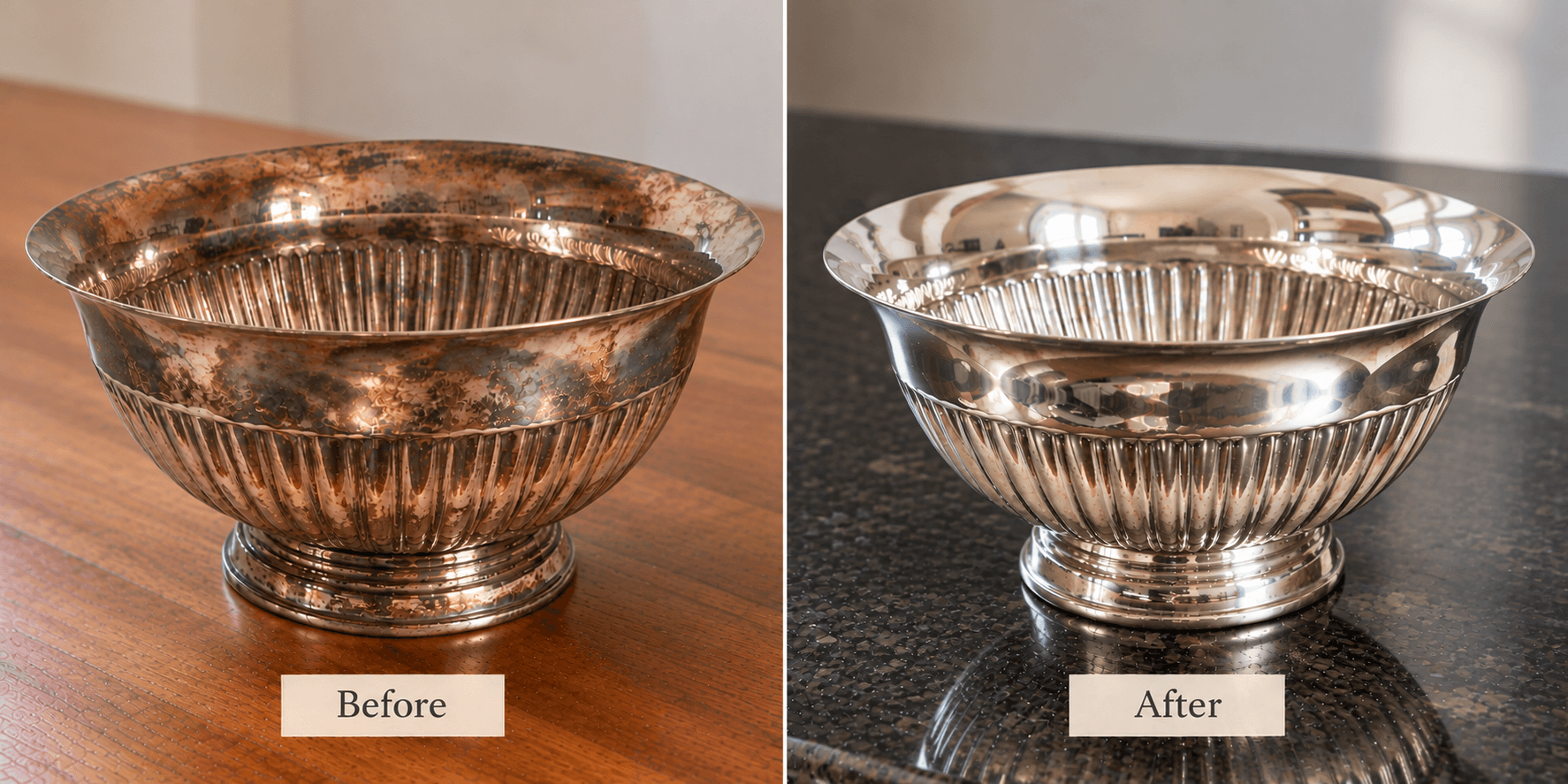
Here’s an example: I once picked up a beautiful vintage silver bowl that a neighbor had set out in a “free” box. I could immediately see its potential. However, it was covered in a layer of tarnish and was almost black. I took it home. First, it sat for several months because I had no idea how to go about cleaning it. I wanted to avoid buying a special product just to clean this one bowl, so I eventually looked up articles on how to clean silver using household items. I made a paste out of baking soda and water. I let it soak for 30 minutes. I gently scrubbed the bowl and washed the paste off. The bowl looked pretty much the same as before. I tried again, this time letting the paste sit for 8 hours. No dice. Eventually I purchased a dedicated silver cleaner and it worked beautifully. I went on to sell the bowl for a pretty good price. But when I factor in the many hours I spent researching and cleaning the bowl, plus the price of the silver polish I had to buy, I probably broke even.
I also picked up a beautiful vintage blouse only to realize when I was getting ready to take photos that it was missing a button. I decided to purchase new buttons that are almost an exact match and sew one on. But if I had realized it was missing the button I probably wouldn’t have purchased it. (See also: Why You’re Losing Money on eBay Sales (and How to Stop It)
Stephanie's Advice
Before you buy something that needs work, ask yourself not only "Can I fix or clean this?" but "Is the potential profit worth the time it will take?"
Keep Your Reselling Toolkit Simple
What you decide to add to your reselling prep toolkit will depend on what you sell and your personal preferences. No matter what you end up deciding to add, my advice is to keep things as simple as possible. Sure, you could use this as a reason to test every stain remover on the market, but then you’d spend a lot of money and have to find somewhere to store all those bottles!
You’ll see from my list that I haven’t bought very much, if anything, that I wouldn’t also use in my day-to-day life. I have kids and find myself using Goof Off and MIss Mouth’s Messy Eater Stain Treater on an almost daily basis. I use my scraper knife to clean my glass stovetop. And I have pets, so I buy lint roller refills in bulk (you probably have no idea how much guinea pigs shed).
Final Thoughts
Part of the beauty of reselling is being able to extend the life of an item. Especially today, when so many items are manufactured to be disposable, the value of older items that last is apparent. I’ve been amazed at what a difference a little bit of cleanup can make in terms of showing off how much life an item actually has left.
When I’m cleaning an item to prep for listing, I like to think about how much the future owner will enjoy it. Polishing the tarnish off of an old silver bowl or gently removing stains from the clothes of a vintage doll are labor intensive, but I know someone will be excited to come across them in my store. Removing corroded battery acid from an electronic toy means that instead of going in the landfill, that toy will go on to be enjoyed by someone’s child. And much simpler things like polishing shoes or ironing clothes mean that some person out there will be really happy to eventually wear the item. I can do all of this because of the simple reselling prep toolkit that I’ve amassed over time.
FAQs
What tools do I need to start reselling?
You can start with household items you already have, such as scissors, cleaning cloths, cotton swabs and rubbing alcohol, then add specialized tools as you discover what you need.
How should I clean thrifted items before reselling them?
Some items can simply be wiped down with a wet cloth, whereas others need something more. The best choice of cleaning tool will depend on the job at hand - items with hard, smooth surfaces can be cleaned with surface cleaner, and stain remover can be used on clothing. Goo/adhesive remover is effective at removing residue from price stickers. Just be sure to check the manufacturer’s instructions and test out any new product or cleaning method on a small, inconspicuous area first.
Should I clean items before selling them on eBay?
In most cases, you will need to clean items before listing and selling them. Cleaning items will result in better photos and has the added benefit of allowing you to inspect an item’s condition before listing.
Is it worth buying damaged or dirty items to resell?
When deciding whether to purchase an item to resell, you will want to consider how much time and effort will be required to prep it. A little bit of clean up or a small repair job (like sewing on a button) might be worth it if you believe the item will sell quickly or for a good price. If, on the other hand, the prep work will require you to buy expensive cleaning products or take up a lot of time, the best decision might be to leave that item on the shelf.
Read Next »